Grassland Gems: Looking for Waxcaps This Autumn
Saturday 7th November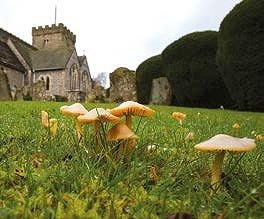
There are around 40 species of waxcap in the UK. Like their woodland cousins, they’re best spotted in late summer and autumn. And as with most fungi, their names are wonderful, from parrots to ballerinas. Some fungi are decomposers, or “saprotrophic”, which means they feed on decaying matter. Waxcaps were once thought to be decomposers too. They’re now understood to be “biotrophic”, which means these brightly coloured mushrooms get their nutrients from a relationship with living plants. Researchers are still learning how waxcaps work, but partnerships like this are common in nature. Most fungi have underground systems called mycelium: masses of tiny threads that connect the mushrooms we see above ground with trees, other plants and one another. These vast networks let them share nutrients, water and even information. Waxcaps do best where farming has left the land alone, in what’s known as “unimproved” grassland: land that hasn’t been treated with pesticides or artificial fertilisers, drained or re-seeded. Like the roots of ancient trees, mycelia take decades to form and connect, and those connections are broken when soil is cultivated. That’s why the hands-off approach of rewilding suits these fungi so well. As farming has become more intensive, this habitat has declined, and the waxcaps have declined with it. Here in Sussex, the chalk grassland of the Downs is ideal waxcap habitat. The fungi are part of an ancient, well-balanced ecosystem. In the warmer months, the nutrient-poor soils support buzzing wildflower meadows that feed butterflies and bees and give ground-nesting birds like skylarks a place to breed. Then, in early autumn, just as the wildflowers fade, the waxcaps pop up and finish off the season. Where you find waxcaps, other grassland fungi usually follow. That makes waxcaps an “indicator species” for corals, earthtongues and pinkgills. This happens so often that the term “waxcap grassland fungi” covers all these groups. It’s not all sweeping meadows, though. Waxcaps also turn up in gardens and parks, and they’re especially fond of quiet churchyards and cemeteries. Keep your eyes peeled on your next walk for these shiny little jewels catching the autumn sun. Photos (if you use them): Parrot Waxcap © Neil Fletcher; Scarlet Waxcap © Graeme Lyons.

